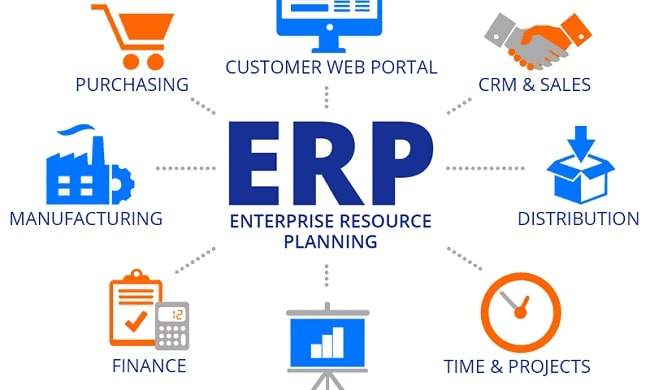
Enterprise Resource Planning (ERP) has become a cornerstone of modern business management, enabling organizations to integrate various functions into one complete system. From finance and human resources to inventory and customer relationship ma erp system hong kong nagement, ERP consolidates essential operations into a unified platform. This level of integration ensures that data flows seamlessly across departments, reducing manual errors and improving overall coordination. Companies of all sizes are recognizing the value of ERP in streamlining internal processes, making data-driven decisions, and enhancing customer service. In today’s competitive market, an ERP system is more than a technological upgrade—it’s a strategic necessity.
One of the most significant advantages of ERP is its ability to boost productivity through automation and real-time data access. Traditional management systems often involve disconnected software or manual record-keeping, leading to inefficiencies and delays. ERP eliminates these silos by offering a centralized database accessible to all departments. This means that employees can access updated information instantly, reducing the need for redundant tasks and unnecessary communication loops. The result is a faster, more agile organization that can respond quickly to market demands, customer needs, and internal challenges, all while maintaining operational consistency and control.
Financial management is another area where ERP provides substantial benefits. With integrated financial modules, businesses can track income, expenses, budgets, and forecasts in real-time. Automated accounting features help reduce errors in reporting and ensure compliance with regulatory standards. ERP also simplifies complex processes like tax calculations, payroll management, and financial auditing. By consolidating financial data in one place, businesses gain clearer visibility into their economic health and can make more accurate strategic plans. This level of control is especially critical in uncertain economic climates, where agility and transparency can determine long-term survival.
ERP also plays a vital role in improving supply chain and inventory management. Businesses with large inventories or multiple suppliers often struggle with tracking goods, managing procurement, and fulfilling orders on time. ERP systems come equipped with tools for inventory tracking, order processing, supplier relationship management, and demand forecasting. These features help reduce overstocking and stockouts, optimize storage costs, and improve overall service delivery. In industries such as manufacturing, retail, and distribution, ERP ensures that supply chain operations are synchronized with customer demand, enhancing both efficiency and satisfaction.
Moreover, ERP systems support better human resource management by automating recruitment, onboarding, employee performance tracking, and payroll. With a centralized system, HR teams can maintain comprehensive employee records, monitor productivity, and ensure compliance with labor laws. Employee self-service portals, often included in ERP systems, also empower staff to manage their own information, such as leave requests and tax forms. This improves communication between HR and employees while reducing administrative burden. As businesses grow, scalable ERP systems make it easier to manage a growing workforce without compromising on HR quality or responsiveness.
In conclusion, ERP is a transformative tool that reshapes how businesses operate and compete. It enables organizations to streamline processes, improve data accuracy, enhance collaboration, and make more informed decisions. While implementing an ERP system requires investment and careful planning, the long-term benefits far outweigh the initial effort. Whether for small businesses looking to scale or large enterprises aiming to modernize, ERP offers a comprehensive solution for achieving operational excellence. As technology continues to evolve, ERP systems will remain at the heart of digital transformation, empowering businesses to thrive in an increasingly dynamic and interconnected world.